How much should you really have in your Emergency Fund?
5 min readBy Prithvi , published on April 19, 2026
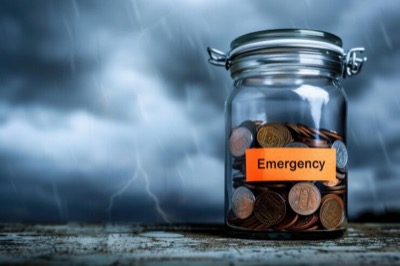
“Keep three to six months of expenses aside.” is something we’ve all heard at some point. It sounds neat, simple, and easy to follow.
But when you actually try to apply it to your own life, the real questions start.
Is three months’ worth of Emergency Fund enough? Is it too much? Is it too less? Does everybody have a three or six months of Emergency Fund?
The answer to all these questions are, NO!
An emergency fund isn’t just another savings target you tick off and move on. It has a very specific role. It’s an investment you make for the moments you don’t plan for. It’s an investment you make to survive when income stops abruptly. And when that happens, what matters most isn’t returns but liquidity and breathing space.
That’s why the “right” number is different for different people.
- If you’re early in your career, with a steady income and not too many responsibilities, you probably don’t need a very large buffer. Even if something goes wrong, you have the flexibility to adjust, cut back, or find your way back relatively quickly. So three months’ of Emergency Fund should be good enough to begin with.
- If you have a family depending on you and you have fixed commitments every month, having atleast six months’ of Emergency Fund is compulsory but a years’ worth of Emergency Fund would be ideal. Because as responsibilities increase, so should the margin of safety.
- If your income isn’t predictable, that is if you’re running a business, freelancing, or working in a space where things can change quickly and you will need more time to stabilize things when there’s a disruption, or you’re the primary earner at home, your emergency fund should give you that time while allowing you and your family to pass through these phases with a little bit of ease. So a years’ worth of Emergency Fund becomes compulsory.
The above frameworks will help you understand the duration of emergency fund you may need, but they still don’t give complete clarity on how much exactly. And that’s where your expenses come into the picture.
Most people miss a simple but important point: what you need to protect is your lifestyle, your monthly outflows and not your salary. So your emergency fund should always be based on your expenses, not your income.
Being honest about your expenses helps you more than anyone else. While calculating your emergency fund, your expenses matter, but it doesn’t have to be a detailed one. Even an approximation of what you actually spend is good enough.
Here’s an example: Person A earns ₹1,20,000 a month. He is married, has two children, and is the sole earning member of the family. Their monthly expenses are roughly₹92,000. Based on his income stability and dependents, he should ideally maintain atleast one year’s worth of emergency funds. That would be ₹92,000 × 12, which comes to ₹11,04,000. However, just having ₹11,04,000 parked in any random investment will not help. This is where most people go wrong.
Influenced by so-called social media finance experts, many people feel the need to “make this money work.” It’s understandable. No one likes seeing a large sum sitting idle. But an emergency fund isn’t meant to perform or generate returns. The moment you start chasing returns with it, you also introduce uncertainty and that defeats the whole purpose.
When you need this money, it should just be there. No second thoughts. So your EF should not be in Stocks, Long-term mutual funds or anything that can fluctuate. Because in an emergency, certainty matters more than returns. Your emergency fund should be easy to access and safe. The common and safer options would be:
- Savings account restricted to parking Emergency Fund
- Short-term Fixed Deposits
- Liquid or Low Duration Debt Funds
You can split it across the above options for balance.
Now the question arises, I do not have a lump sum amount to set aside for Emergencies, what should I do?
If you do not have the lump sum required for Emergency Fund, you can build it slowly, alongside your investments. Even setting aside a small amount consistently gets you there over time. What matters is that you start moving in that direction. Because at the end of the day, an emergency fund is less about the number and more about what it gives you.
It gives you time. It gives you freedom. And most importantly, it helps you make better decisions when things are not going your way.
There’s no single number that works for everyone. But if you follow this approach and ascertain a number that feels right for you stop overthinking it. Commit to it, build it and protect it. Because an emergency fund is not just another financial milestone, it’s your first line of Defence. And when it is in place, you do not react out of fear but become confident and respond with clarity.